Is the Fried Egg Jellyfish Poisonous (Spiegeleiqualle Giftig)? Unveiling the Truth About This Mediterranean Beauty
The shimmering waters of the Mediterranean Sea are home to a diverse array of marine life, some breathtakingly beautiful, others shrouded in mystery or misconception. Among the most visually striking is the Fried Egg Jellyfish, scientifically known as *Cotylorhiza tuberculata*, or more commonly in German-speaking regions as "Spiegeleiqualle." Its distinctive appearance often sparks curiosity, but a common question that arises, especially for those encountering it during a vacation, is: "Is the Spiegeleiqualle giftig?" or "Is the Fried Egg Jellyfish poisonous?" Let's dive deep into the fascinating world of this unique creature and separate fact from fiction regarding its perceived danger.
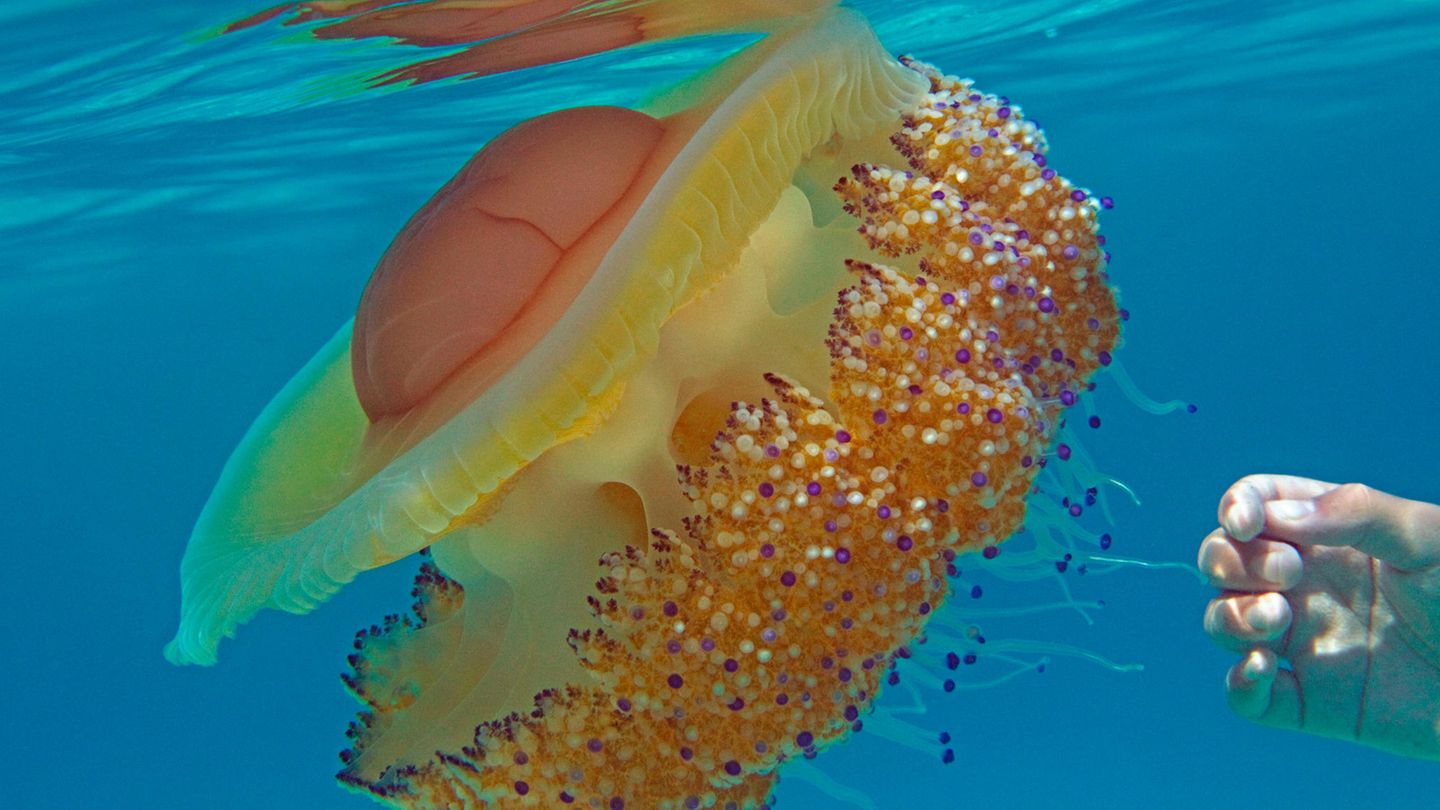
For anyone who has marveled at its unique "sunny-side up" appearance – a white, dome-shaped bell with a prominent, yellowish-brown central dome resembling a fried egg yolk – it's easy to be captivated. But before any concerns about its venom dampen your appreciation, it’s crucial to understand that despite possessing a mild stinging capability, the Fried Egg Jellyfish is considered entirely harmless to humans. This article will explore its captivating biology, its true venomous nature, and why you needn't worry about this charming resident of our oceans. For more insights into this fascinating creature, you might also be interested in
Spiegeleiqualle Giftig - Article 1 and
Spiegeleiqualle Giftig - Article 2.
The Alluring Fried Egg Jellyfish: A Visual Delight
The *Cotylorhiza tuberculata* is a true spectacle of nature. Belonging to the class of Scyphozoa (true jellyfish) and specifically the order Rhizostomeae (root-mouthed jellyfish), its appearance is unmistakable. Its bell, typically whitish and convex, can grow impressively large, often reaching diameters of up to 35 centimeters, with some exceptional specimens even exceeding 40 centimeters. The defining feature, and the origin of its common name, is the prominent, often yellowish or brownish, hemispherical bulge at the center of its bell, giving it the uncanny resemblance to a fried egg. This central "yolk" can vary slightly in color, adding to its natural charm.
Beneath this distinctive "egg" are eight primary oral arms, along with numerous smaller, scattered arms. These arms are equipped with rounded, often violet-tipped ends that appear thickened. Interestingly, the yellowish coloration sometimes observed on the fringes of its bell and arms isn't inherent to the jellyfish itself but comes from symbiotic algae living on its surface. These tiny algae contribute to the jellyfish's vibrant hues and play a significant role in its overall biology, as we'll discover later. This jellyfish primarily inhabits the Mediterranean Sea, including coastal areas of Spain and Croatia, often found swimming gracefully just below the water's surface, making it easily spotted by swimmers and snorkelers.
Unpacking the "Giftig" Question: Is the Fried Egg Jellyfish Poisonous to Humans?
The most pressing question for many observers is, "Is the Spiegeleiqualle giftig?" – Is this beautiful creature venomous or poisonous? The straightforward answer is:
Yes, the Fried Egg Jellyfish does possess venom, but it is unequivocally harmless to humans.
Like most jellyfish, *Cotylorhiza tuberculata* is equipped with nematocysts, specialized stinging cells located on its tentacles and oral arms. These nematocysts contain a mild venom. However, the key distinction lies in the potency and delivery mechanism of this venom. For the Fried Egg Jellyfish, its venom is specifically adapted to subdue its preferred diet: smaller prey such as plankton, tiny fish, and small crustaceans. When these small organisms come into contact with the jellyfish's oral arms, the nematocysts fire, injecting venom that quickly paralyzes or incapacitates them, making them easier to digest.
For humans, the venom's effect is negligible. There are several reasons why you don't need to fear a painful sting from this jellyfish:
- Weak Venom: The venom is extremely mild and not potent enough to cause any significant reaction in humans. It's designed for microscopic prey, not large mammals.
- Ineffective Delivery: Unlike more dangerous jellyfish species that possess long, robust stinging tentacles capable of deeply penetrating human skin, the Fried Egg Jellyfish lacks such mechanisms. Its oral arms and their associated nematocysts are generally too weak or too short to effectively pierce the outer layer of human skin.
- No Significant Tentacles: While it has oral arms, it doesn't have the long, trailing tentacles associated with strong stings. Swimmers who accidentally brush against a Fried Egg Jellyfish typically report no sensation at all, or perhaps a very slight, almost imperceptible tingling, which quickly fades.
So, if you encounter a Fried Egg Jellyfish while swimming in the Mediterranean, there's absolutely no need for alarm. You can admire its beauty without concern for a dangerous sting.
Life Beneath the "Yolk": Habitat, Diet, and Unique Biology
The Fried Egg Jellyfish is a fascinating creature not just for its looks but also for its unique biological adaptations. Primarily inhabiting the temperate waters of the Mediterranean Sea, it thrives in coastal areas and often congregates near the surface, basking in the sun.
Its diet consists mainly of zooplankton, small fish, and tiny crustaceans. What makes its feeding mechanism particularly intriguing is that, like other root-mouthed jellyfish, the *Cotylorhiza tuberculata* doesn't possess a single, distinct mouth opening. Instead, its many oral arms are covered in tiny pores that lead to an intricate network of canals. Once its small prey is stunned by the mild venom, digestive juices are secreted externally, breaking down the food into a digestible slurry that is then absorbed directly through these pores. This highly efficient method ensures it extracts maximum nutrients from its small catches.
Another remarkable aspect of the Fried Egg Jellyfish is its ability to move independently. Unlike many jellyfish species that are largely at the mercy of ocean currents, the Spiegeleiqualle can actively propel itself through the water using rhythmic contractions of its bell. This independent movement allows it to navigate its environment, find food, and avoid predators more effectively.
Furthermore, it engages in a beautiful symbiotic relationship. The yellowish-brown coloration in its central dome and sometimes on its fringes comes from zooxanthellae, a type of symbiotic algae that lives within its tissues. These algae perform photosynthesis, converting sunlight into energy, some of which is shared with the jellyfish, supplementing its diet. In return, the jellyfish provides the algae with a protected environment and access to nutrients. This is a mutually beneficial arrangement typical of many marine invertebrates in sunlit waters. The jellyfish also offers protection to small fish, which often seek refuge amongst its mild stinging filaments, safe from larger predators, as the jellyfish does not prey on them.
The Lifecycle of a Spiegeleiqualle: From Larva to Medusa
The lifecycle of the Fried Egg Jellyfish, like many scyphozoans, is a complex and captivating journey involving both sexual and asexual reproduction stages. It begins with the adult medusa, the free-swimming jellyfish we commonly observe.
As the female medusae approach the end of their lives, they release Planula larvae. These tiny, ciliated larvae are planktonic for a short period before settling onto a suitable substrate at the bottom of the sea. Once attached, they undergo a metamorphosis, developing into a sessile (stationary) polyp form. These polyps are small, stalk-like organisms that can reproduce asexually, budding off new polyps, effectively cloning themselves.
Over time, under specific environmental conditions, these polyps transition into a different stage. They begin to segment horizontally, a process called strobilation, producing stacked, disc-like structures. Each of these discs detaches to become an Ephyra larva – a tiny, free-swimming jellyfish-like creature with eight developing lobes. These Ephyrae then grow and mature, gradually developing into the full-fledged medusa form of the Spiegeleiqualle, completing the cycle. This intricate process ensures the continuation of the species, allowing it to thrive in its Mediterranean habitat.
Encountering the Spiegeleiqualle: Tips for Swimmers and Aquarists
Given that the Fried Egg Jellyfish is a common sight in the Mediterranean, especially during warmer months, many people will inevitably encounter one while swimming, snorkeling, or diving.
- For Swimmers and Beachgoers: If you spot a *Cotylorhiza tuberculata*, there's no need to panic or swim away in haste. It is harmless. Feel free to observe its unique beauty from a respectful distance. While it won't sting you, it's always best practice to avoid directly touching any wild animal, out of respect for the creature and to prevent any unintended stress to it.
- For Aquarists: The Fried Egg Jellyfish is a truly captivating species for display in specialized jellyfish aquariums. If considering keeping them, remember they require a carefully managed environment. They thrive in gentle, consistent water flow, as strong currents can damage their delicate bells. Their diet of plankton and small invertebrates needs to be meticulously provided. Due to their symbiotic algae, they also benefit from appropriate lighting, mimicking their natural sunlit habitat. They are a delicate species, and successful keeping requires dedicated care and knowledge.
Conclusion
The Fried Egg Jellyfish, or Spiegeleiqualle (*Cotylorhiza tuberculata*), is a true marvel of the Mediterranean Sea. Its distinctive appearance, complex lifecycle, and unique biological adaptations make it a subject of endless fascination. Crucially, any concerns regarding whether the "Spiegeleiqualle giftig" are unfounded. While it does possess a mild venom, it is specifically designed for small prey and poses absolutely no threat to humans. So, the next time you're enjoying the sun-drenched beaches of the Mediterranean and spot one of these captivating creatures gracefully pulsing through the water, take a moment to appreciate its harmless beauty and its vital role in the marine ecosystem.