Unveiling the Fried Egg Jellyfish: A Gentle Giant of the Mediterranean
The sun-drenched waters of the Mediterranean are home to a vibrant array of marine life, and among its most captivating inhabitants is a creature often sparking curiosity and sometimes apprehension: the Spiegeleiqualle, or Fried Egg Jellyfish (*Cotylorhiza tuberculata*). With its distinctive appearance resembling a sunny-side-up egg, it’s a memorable sight for anyone swimming or snorkeling in its habitat. However, its unusual form often leads to a common question, tinged with a touch of concern:
Is the Spiegeleiqualle giftig? Or, more precisely in English, is it poisonous or venomous?
The short and reassuring answer is that for humans, this magnificent jellyfish is largely harmless. While it does possess a mild venom, its effect on people is negligible, making it one of the gentler giants of the sea. This article delves into the fascinating world of the Fried Egg Jellyfish, debunking common myths about its toxicity, exploring its unique biology, and offering insights into how we can appreciate this stunning creature responsibly.
A Mediterranean Marvel: Appearance and Habitat
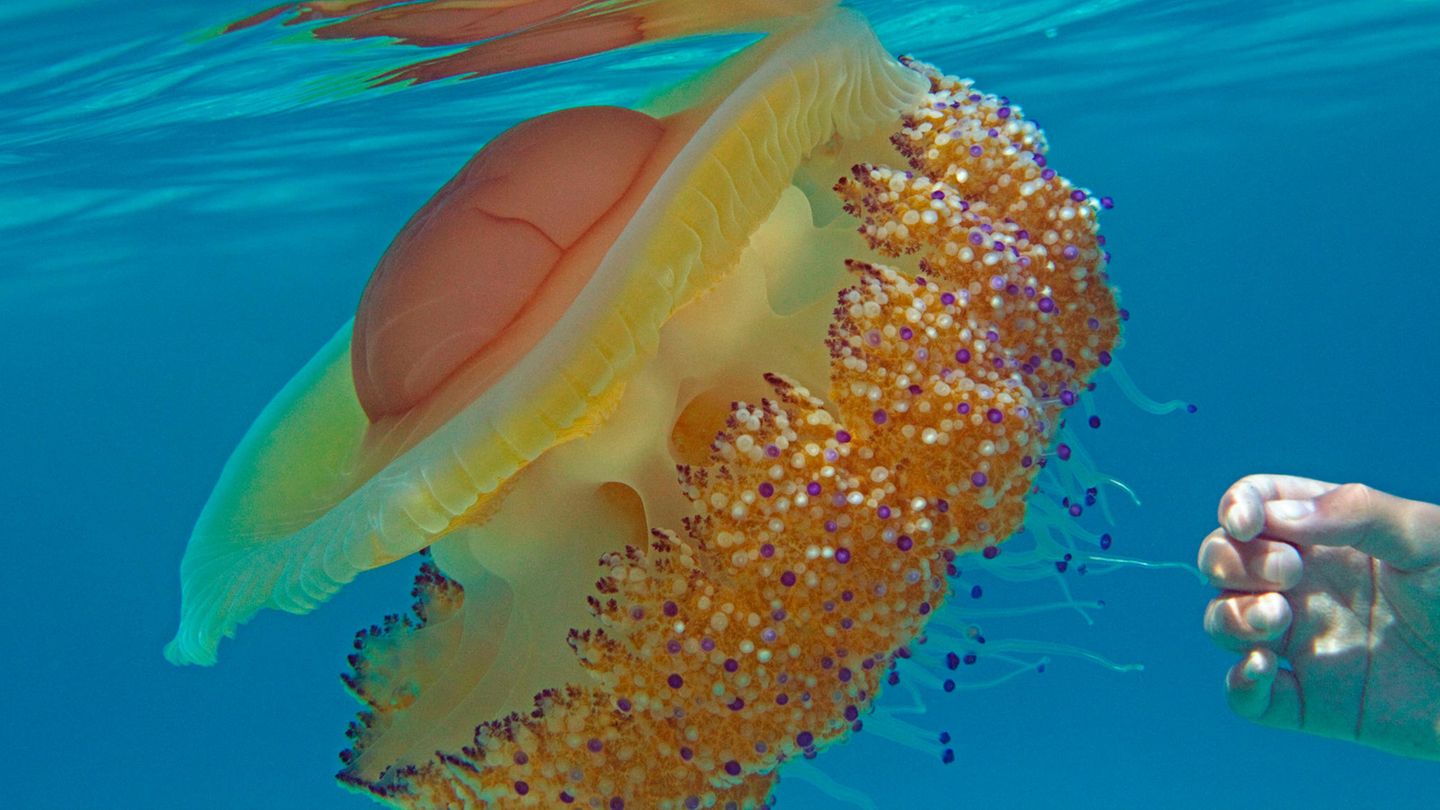
The Fried Egg Jellyfish is a true spectacle of nature. Belonging to the class Scyphozoa (true jellyfish) and order Rhizostomeae (root-mouth jellyfish), it can grow quite large, with its bell reaching an impressive diameter of up to 35-40 centimeters. The bell itself is typically whitish or translucent, but its most defining feature is the prominent, semi-spherical, brownish or yellowish dome in the center – strikingly similar to the yolk of a fried egg. This central "yolk" is not just for show; it's densely packed with symbiotic algae that give the jellyfish its characteristic golden hue and aid in its energy production through photosynthesis.
Below this iconic bell, the Fried Egg Jellyfish sports eight primary oral arms, along with numerous smaller, scattered arms. These arms are often adorned with rounded, thickened ends that can appear a vibrant violet, adding another splash of color to its already captivating form.
Primarily found in the warm, clear waters of the Mediterranean Sea, particularly off the coasts of Spain and Croatia, these jellyfish are often observed just below the surface. Unlike some jellyfish that drift passively with currents, *Cotylorhiza tuberculata* is capable of independent movement, rhythmically pulsating its bell to propel itself through the water. This ability allows it to navigate its environment with a degree of autonomy, making it a more active participant in its ecosystem.
Spiegeleiqualle Giftig? Debunking the Venom Myth for Humans
The core concern for many encountering a jellyfish is the potential for a sting. When asking "Spiegeleiqualle giftig?", the underlying worry is often about skin irritation, pain, or even severe reactions. It's crucial to understand that while almost all jellyfish possess nematocysts (stinging cells) containing venom, the potency and delivery mechanism vary wildly across species.
For the Fried Egg Jellyfish, the good news is that its venom is extremely weak and poses no threat to humans.
Here’s why you can breathe easy:
- Mild Nettle Toxin: The *Cotylorhiza tuberculata* possesses a very mild "nesselgift" or nettle toxin. This venom is specifically adapted to stun its much smaller prey, not to inflict harm on large creatures like humans.
- Ineffective Against Human Skin: The stinging cells on its arms are not strong enough, nor designed, to penetrate the relatively thick outer layer of human skin. Even if you were to come into direct contact, you would likely feel nothing more than a slimy sensation. Any reaction would be incredibly mild, perhaps akin to a fleeting tickle, if noticeable at all.
- Absence of Dangerous Tentacles: Unlike infamous jellyfish species such as the Box Jellyfish or Portuguese Man o' War, which have long, trailing tentacles armed with powerful nematocysts, the Fried Egg Jellyfish lacks such dangerous appendages. Its arms are less about aggressive stinging and more about filtering food.
Therefore, the idea of the Spiegeleiqualle being "giftig" in a way that harms humans is a misconception. You don't need to fear a painful sting or a visit to the hospital if you accidentally brush against one during your Mediterranean holiday. The worst you might encounter is a gelatinous texture. This calm reality stands in stark contrast to the severe reactions one might experience from more potent jellyfish, highlighting the importance of species-specific identification. For a deeper dive into the varying levels of jellyfish toxicity, you can refer to
Spiegeleiqualle Giftig - Article 1.
What is the Venom *Actually* For?
While harmless to humans, the Spiegeleiqualle's weak venom plays a vital role in its survival. Its primary function is to incapacitate its prey. The jellyfish feeds on plankton, small fish, and tiny crustaceans. When these small organisms come into contact with the stinging cells on its arms, the mild venom quickly stuns them, making them easier to capture and digest. Without this mild toxin, the jellyfish would struggle to secure its meals, demonstrating how even "harmless" creatures utilize nature's tools for sustenance.
Life Beneath the Bell: Diet, Shelter, and Reproduction
Beyond its fascinating appearance and benign nature, the Fried Egg Jellyfish exhibits several intriguing biological characteristics that make it a cornerstone of its marine ecosystem.
A Unique Feeding Mechanism
Unlike many animals, the Spiegeleiqualle does not possess a distinct mouth opening in the traditional sense. Instead, its nutritional intake is a more diffuse process. Once its small prey is stunned, specialized digestive juices released from its oral arms break down the food particles, which are then absorbed directly by the jellyfish's body. This efficient, internal digestion process is characteristic of many rhizostome jellyfish and is perfectly suited for its diet of micro-organisms and small marine life.
Symbiotic Relationships and Ecological Role
The vibrant yellow coloration often seen at the edges of the Fried Egg Jellyfish's bell is not just pigment; it's due to the presence of symbiotic zooxanthellae algae living within its tissues. These algae perform photosynthesis, converting sunlight into energy, some of which is then shared with the jellyfish. In return, the jellyfish provides the algae with a protected environment and essential nutrients. This mutually beneficial relationship is crucial for the jellyfish's energy budget, especially when food sources are scarce.
Furthermore, the large, undulating bell and numerous arms of the Spiegeleiqualle offer a unique refuge for small fish. Juvenile fish, particularly species like juvenile trevally, are often observed swimming safely within the protective "curtains" of the jellyfish's oral arms. These small fish gain protection from larger predators, who are deterred by the jellyfish's presence (even if its sting is harmless to them, it might be an unpleasant sensation). Crucially, this relationship is safe for the fish because the Fried Egg Jellyfish does not prey on them. Its venom is too weak, and its digestive system isn't geared for consuming larger fish. This beautiful example of commensalism highlights the intricate web of life within marine environments.
The Circle of Life: Reproduction
The life cycle of the Fried Egg Jellyfish, like many jellyfish, is complex and involves multiple stages. Females, shortly before their natural demise, release minute planula larvae. These larvae are free-swimming initially but soon settle onto a suitable substrate at the seabed, where they metamorphose into small, sessile polyps. These polyps then undergo a process called strobilation, budding off tiny, disc-shaped ephyra larvae. The ephyrae eventually develop into the free-swimming medusae – the iconic Fried Egg Jellyfish we observe in the open water – thus completing the lifecycle. This fascinating transformation ensures the continuation of the species and contributes to the biodiversity of the Mediterranean. For a more detailed look at the reproductive cycles of various jellyfish, check out
Spiegeleiqualle Giftig - Article 3.
Encountering the Fried Egg Jellyfish: Tips for Swimmers and Enthusiasts
Encountering a Fried Egg Jellyfish in its natural habitat is often a highlight of a Mediterranean swim. With its harmless nature clarified, here are some practical tips for interaction:
For Swimmers and Beachgoers:
- Observe from a Distance: While harmless, it's always respectful and safest to admire any marine creature without initiating direct contact.
- No Need for Panic: If a Fried Egg Jellyfish drifts near you, there's absolutely no cause for alarm. Its presence doesn't pose a threat. Simply swim around it calmly.
- Avoid Deliberate Touching: Even though it's harmless to you, deliberate touching can stress the jellyfish or damage its delicate structure. Remember, it's a living organism.
- What if I Touch One Accidentally? If accidental contact occurs, don't worry. Simply rinse your skin with fresh or saltwater. There's no need for special treatments or medical attention. The sensation, if any, will be minimal to non-existent.
For Aquarium Enthusiasts:
The Fried Egg Jellyfish is also a popular species for advanced jellyfish aquariums due to its striking appearance and relatively peaceful nature.
- Gentle Flow Required: In an aquarium setting, it's crucial to provide a weak and uniform water flow to mimic its natural environment and prevent injury to its delicate bell.
- Specialized Care: Keeping these jellyfish requires specific knowledge about water quality, feeding, and tank design, making them unsuitable for beginner aquarists.
Conservation and Appreciation:
As with all marine life, appreciating the Fried Egg Jellyfish also involves respecting its role in the ecosystem. These beautiful creatures are indicators of healthy marine environments and contribute to the delicate balance of the food web. Observing them without disturbance helps maintain the natural beauty and biodiversity of our oceans.
Conclusion
The Spiegeleiqualle, or Fried Egg Jellyfish, is truly a jewel of the Mediterranean Sea. Its stunning appearance, fascinating biology, and remarkable symbiotic relationships make it a creature worthy of admiration. Most importantly, the persistent question of "Spiegeleiqualle giftig?" can be definitively answered with a resounding "no" when it comes to human interaction. Its very mild venom is a tool for survival against its tiny prey, not a threat to curious swimmers. So, the next time you find yourself gazing into the azure waters of the Mediterranean, embrace the opportunity to appreciate this gentle giant for what it truly is: a beautiful, harmless, and integral part of our planet's incredible marine tapestry.